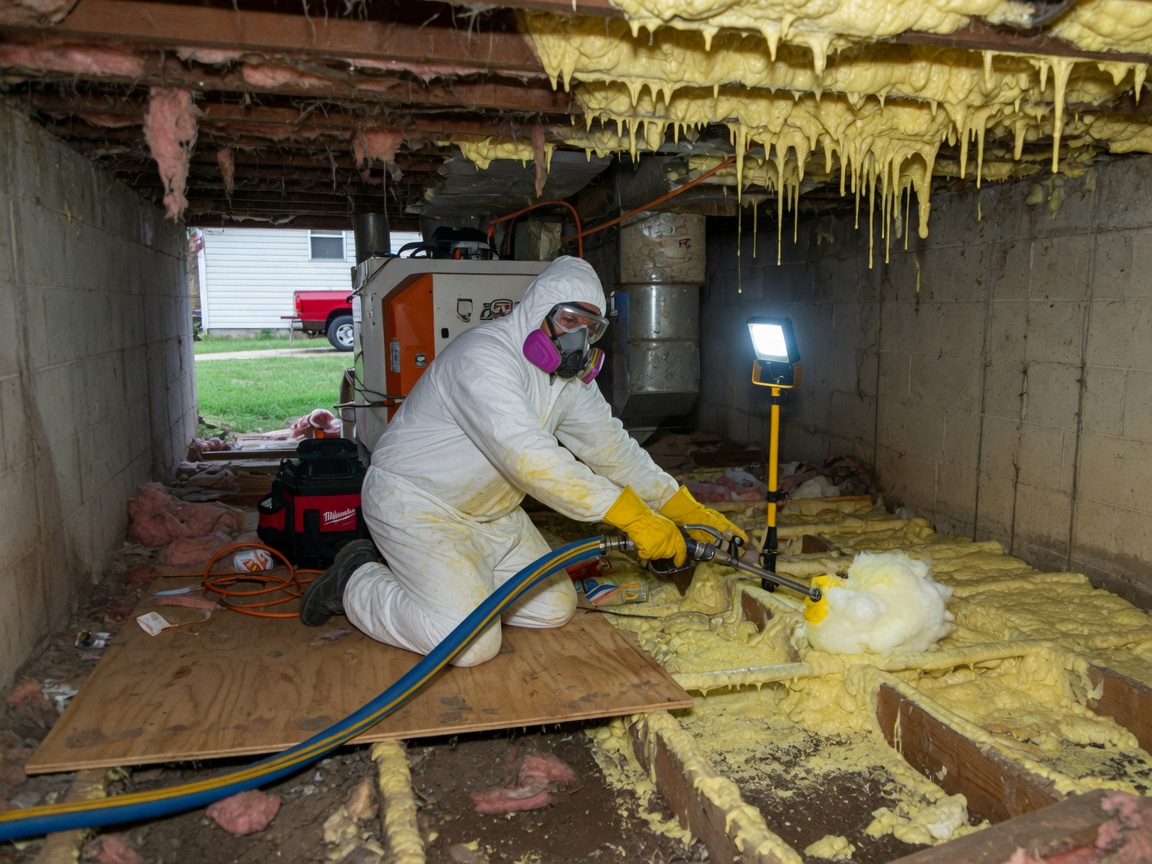
Jenks homes in neighborhoods like Downtown Jenks and South Jenks often sit on pier-and-beam foundations built decades ago. These crawl spaces trap humidity from the area's subtropical climate, leading to wood rot and higher cooling loads during hot summers. Closed cell spray foam creates a rigid air and moisture barrier that adheres directly to joists and soil, reducing condensation that forms when mild winter air meets warmer ground temperatures. Proper application requires checking for standing water first, especially near the Jenks Riverwalk where drainage can be inconsistent.
Open cell foam works better in vented crawl spaces common around Central Park and near the Oklahoma Aquarium, allowing some breathability while still cutting air leakage. Technicians must seal rim joists thoroughly because Tulsa County winds push humid air under homes from nearby Broken Arrow. Edge cases include older ductwork that sags into the foam path and requires temporary support during spraying. Always verify local building codes on vapor retarders before starting, as improper layering can trap moisture against sill plates.
Homeowners in Riverwalk frequently overlook access hatches that leak conditioned air downward. Spray foam here needs to wrap around pipes and electrical without creating cold spots that attract condensation. The work changes in summer when high dew points make surface prep critical to avoid adhesion failures on damp lumber.
Technician insight
In Jenks, the thing that catches most people out with Crawl Space Spray Foam Insulation is the high summer humidity pushing through pier-and-beam foundations in South Jenks homes. Mild winters keep the ground warmer than expected, so skipping a moisture test before spraying often leads to trapped condensation on the new foam.
South Jenks Pier-and-Beam Home
Homeowner noticed musty air and higher summer bills in a 1970s house near Central Park. Inspection revealed damp soil and gaps at the rim joists allowing humid air from the river. Closed cell foam was applied to the perimeter and underside after drying the space. The crawl space stayed drier through the next humid season with reduced air leakage.
Crawl Space Spray Foam Insulation Services We Offer
✓Closed Cell Crawl Space Insulation
High-density closed cell foam seals against ground moisture and provides structural rigidity in unvented Jenks crawl spaces.
✓Open Cell Crawl Space Insulation
Lower-density open cell foam fills cavities while permitting vapor transmission in vented crawl spaces typical of older South Jenks homes.
✓Crawl Space Rim Joist Sealing
Targeted foam application at the perimeter blocks air infiltration from Tulsa County winds entering under the home.
✓Crawl Space Vapor Barrier Integration
Spray foam paired with sealed ground barriers prevents humidity migration common during Jenks humid summers.
✓Ductwork Encapsulation in Crawl Space
Foam application around HVAC ducts in crawl spaces reduces energy loss in homes near the Jenks Riverwalk.
Crawl Space Spray Foam Insulation Cost in Jenks, OK
| Service | Typical Range | What Affects It |
|---|---|---|
| Crawl Space Inspection | Free | Required before any quote in Jenks |
| Closed Cell Application | $1.80–$2.50 per sq ft | Higher density for moisture-prone areas |
| Open Cell Application | $1.10–$1.60 per sq ft | Vented spaces in older homes |
| Rim Joist Sealing Only | $450–$850 | Perimeter work on typical Jenks foundation |
Ranges are typical for Jenks, OK and confirmed with an exact written quote before any work starts.
How it works
- 1
Site Assessment
Technician inspects access, moisture levels, and existing insulation in the crawl space, noting any drainage issues common near the river.
- 2
Surface Preparation
Remove debris, address standing water, and protect pipes and wiring before spraying begins.
- 3
Foam Application
Apply chosen foam type to walls, rim joists, and underside of floor in controlled passes.
- 4
Final Inspection
Check coverage, trim excess, and confirm ventilation meets local requirements before closing access.
Pricing
Upfront quotes based on square footage, access difficulty, and foam type after site visit.