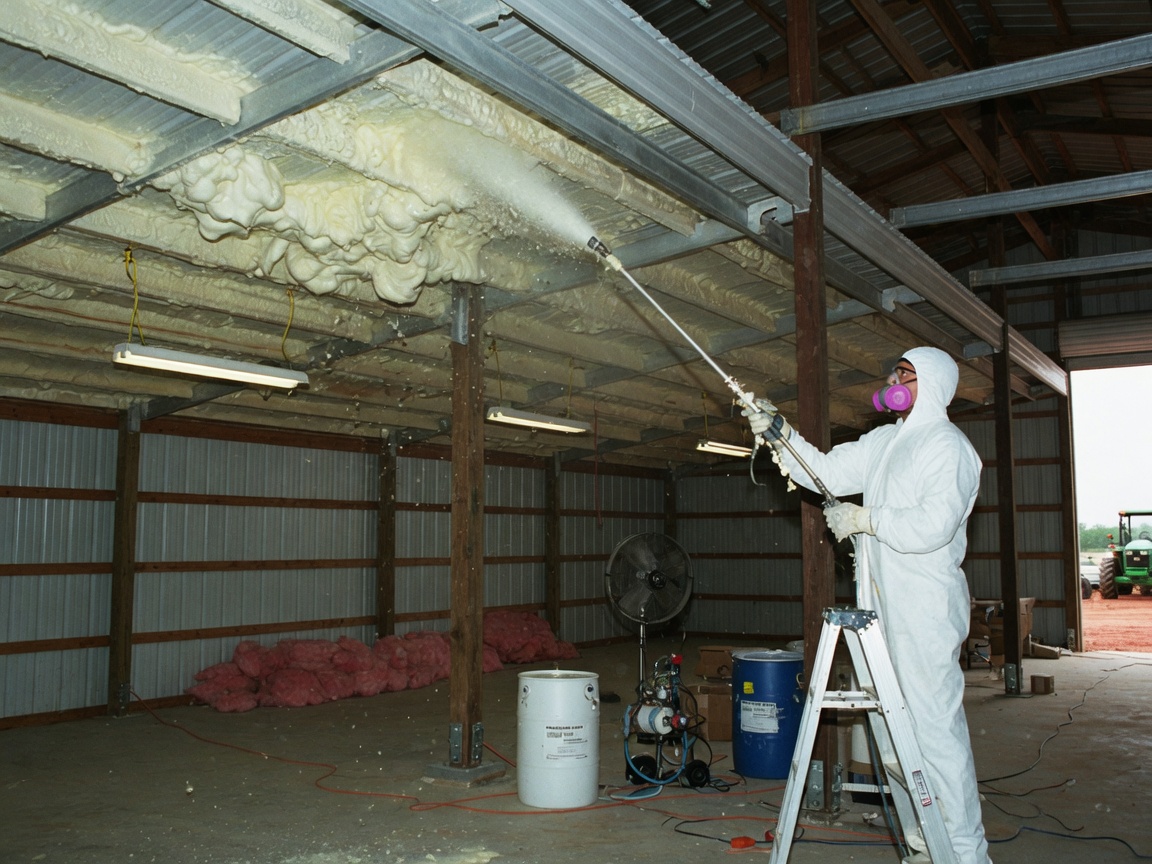
Pole barns in Jenks often feature exposed metal panels and open framing that create condensation problems during humid subtropical summers. Closed cell spray foam adheres directly to the metal, forming a thermal break that stops moisture from reaching the interior while adding structural rigidity. Application must occur when surface temperatures stay above 50 degrees, which limits winter work even with mild conditions in Tulsa County. Proper thickness of two inches minimum prevents corrosion on older galvanized sheets common in South Jenks structures.
Edge cases include barns near the Arkansas River or Jenks Riverwalk where higher moisture loads demand closed cell over open cell to avoid trapped vapor. Roof slopes and girt spacing affect foam coverage, requiring extra passes at eaves and ridge vents. Building codes in Tulsa County require ignition barriers over exposed foam in occupied spaces, so installers add intumescent coatings after the foam cures. Skipping this step risks failed inspections on jobs near Central Park or Downtown Jenks.
Hot summer days push interior temperatures high in uninsulated pole barns, so foam must be applied in early morning or shaded sections to maintain proper reaction. Broken Arrow and Tulsa crews frequently see delamination when foam is sprayed over dusty or oily metal surfaces without prep. Owners should clear stored equipment and sweep walls before arrival to avoid rework.
Technician insight
In Jenks the thing that catches most people out with Pole Barn Spray Foam Insulation is skipping surface prep on older metal near the river; the mild winters let crews work later in the year but high summer humidity still forces early morning starts to keep the foam from reacting poorly on South Jenks barns.
South Jenks pole barn with roof condensation
Owner reported dripping from the metal roof after humid nights. Inspection showed no insulation and poor ventilation. Closed cell foam was applied to the roof deck and upper walls at two inches, followed by an ignition barrier. Condensation stopped and interior temperatures stabilized.
Pole Barn Spray Foam Insulation Services We Offer
✓Closed Cell Spray Foam for Pole Barn Walls
Applies rigid closed cell foam to metal walls to block condensation and add r-value in Jenks humidity.
✓Open Cell Spray Foam for Pole Barn Ceilings
Fills ceiling cavities with open cell foam for sound control and basic thermal performance in milder winter months.
✓Pole Barn Roof Deck Insulation
Sprays foam directly to underside of metal roof panels to reduce heat gain during Tulsa County summers.
✓Vapor Barrier Integration with Foam
Combines closed cell foam with seam sealing at base plates and around doors to manage ground moisture in South Jenks barns.
✓Pole Barn Door and Frame Sealing
Foams around overhead doors and man doors to stop air leaks common in older Riverwalk area structures.
Pole Barn Spray Foam Insulation Cost in Jenks, OK
| Service | Typical Range | What Affects It |
|---|---|---|
| Closed cell foam on walls and roof (1,000–2,000 sq ft) | $1.80–$2.60 per board foot | Moves with thickness and whether ignition barrier is added |
| Open cell ceiling only | $0.90–$1.40 per board foot | Lower cost option for basic thermal and sound control |
| Door and frame sealing add-on | $250–$450 | Depends on number and size of overhead doors |
Ranges are typical for Jenks, OK and confirmed with an exact written quote before any work starts.
How it works
- 1
Site Assessment
Inspect metal condition, framing, and existing ventilation in the Jenks pole barn before quoting.
- 2
Surface Preparation
Clean dust, oil, and loose scale from panels and confirm substrate temperatures meet application requirements.
- 3
Foam Application
Spray closed or open cell foam in lifts to specified thickness while monitoring ambient humidity.
- 4
Finishing And Cleanup
Apply ignition barrier where required, trim excess, and remove overspray from floors and equipment.
Pricing
Most Jenks pole barn insulation jobs are quoted per board foot after on-site measurement; smaller structures often fall in the lower range while larger or multi-bay barns increase due to access and thickness needs.